A commercial roof rarely fails all at once. Most leaks begin as small, easy-to-miss issues that quietly worsen over months or seasons. For property managers and facility managers, catching those early signs can mean the difference between a targeted repair and a much larger project. Below are seven indicators that a commercial roof may be leaking — or heading in that direction.
1. Water stains on ceilings or walls
Discolored patches, bubbling paint, or brownish rings on interior ceilings and walls are among the most common early signs. These stains often appear far from the actual entry point, since water can travel along structural members before dripping down.
2. Ponding water that doesn't drain
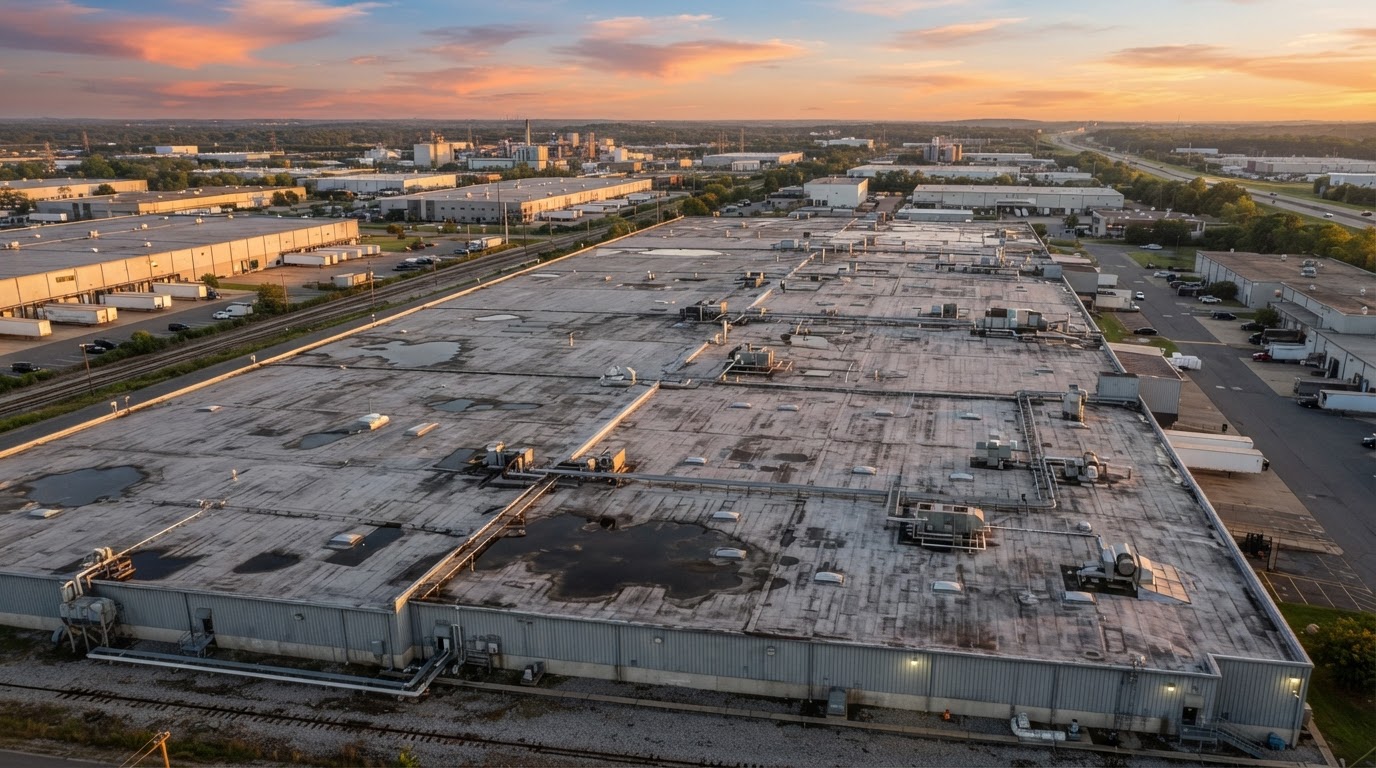
Flat and low-slope commercial roofs are designed to shed water, not hold it. If water is still pooling 24–48 hours after rain, the drainage path may be compromised. Persistent ponding can accelerate membrane aging and increase leak risk.
3. Blisters, bubbles, or ridges in the membrane
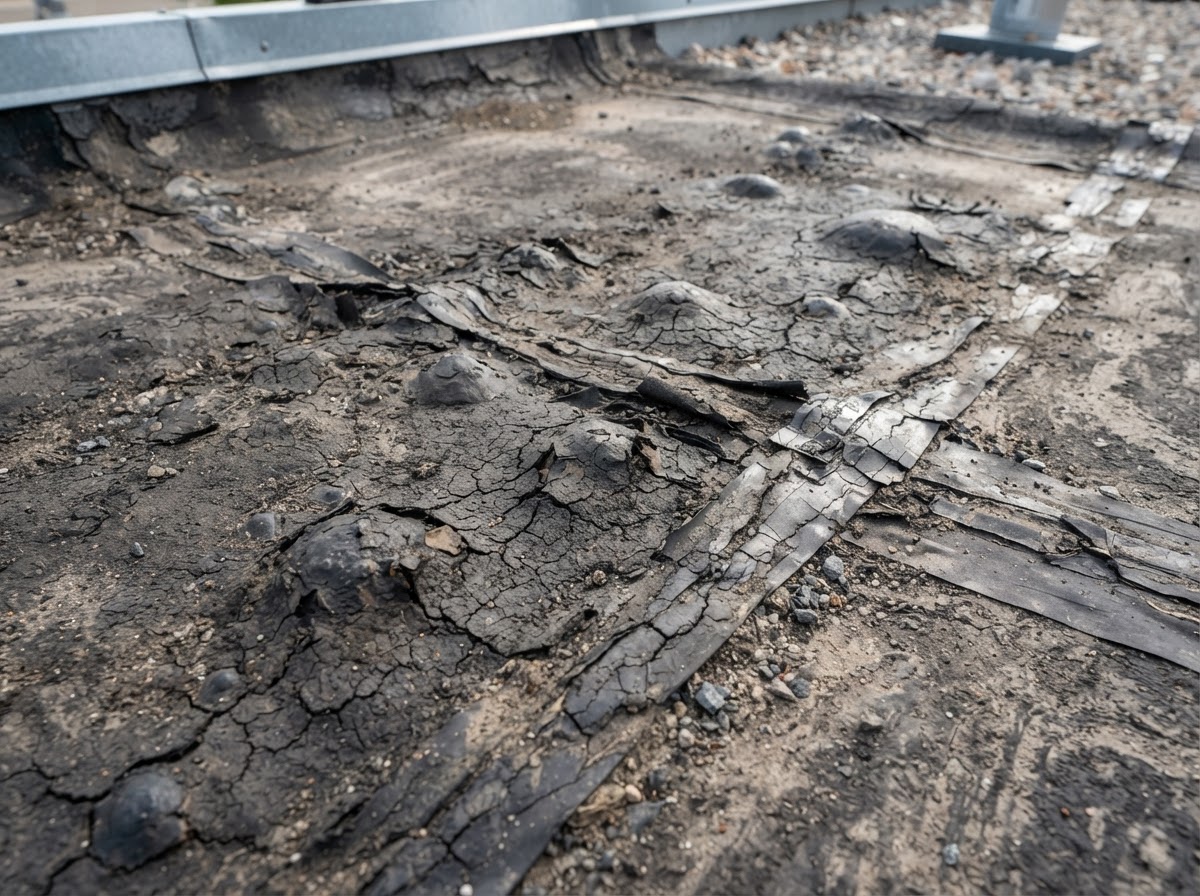
When moisture becomes trapped beneath a roof membrane, it can form blisters or raised ridges. These are signs that water has already penetrated the surface and is working its way through the system.
4. Cracking, splitting, or alligatoring
As roofing materials age and cycle through temperature extremes, the surface can crack or take on a cracked, alligator-skin texture. Once the protective surface breaks down, the layers underneath become vulnerable.
5. Loose or separated seams and flashing
Seams and metal flashing around penetrations — vents, skylights, HVAC curbs, edges — are common leak entry points. If you see lifting, gaps, or separated seams during a walkthrough, they warrant attention.
6. Higher energy bills or interior humidity
A compromised roof can affect insulation performance and allow moisture into the building envelope. Unexplained increases in HVAC costs or indoor humidity can sometimes trace back to a roof that is no longer performing.
7. Recurring leaks in the same area
If the same spot keeps leaking after repeated patching, the underlying cause likely hasn't been addressed. Recurring leaks are a strong signal that a more thorough evaluation is needed.
When to request an evaluation
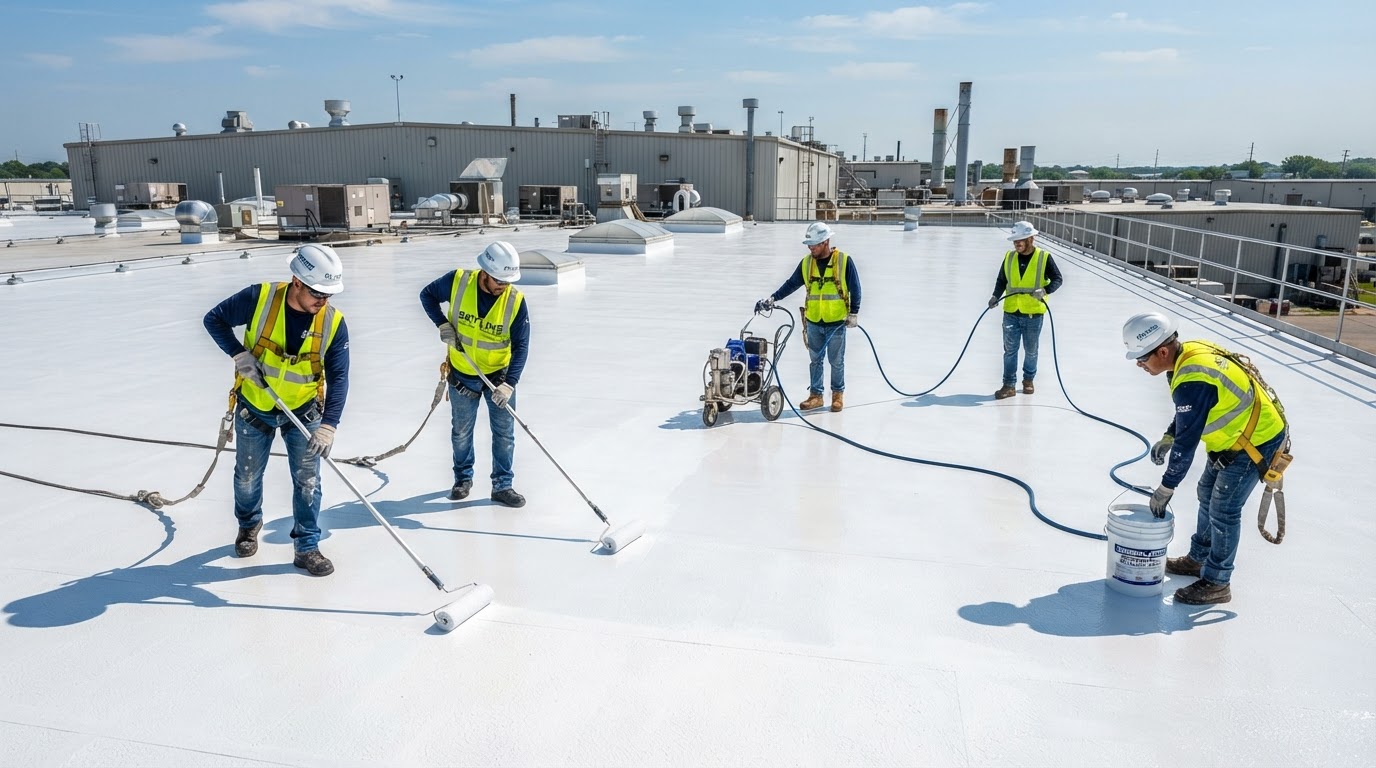
If several of these signs are present, or if leaks are recurring despite repairs, it's reasonable to have the roof evaluated. The goal is to understand the true condition of the system before deciding between repair, restoration, coating, or replacement.