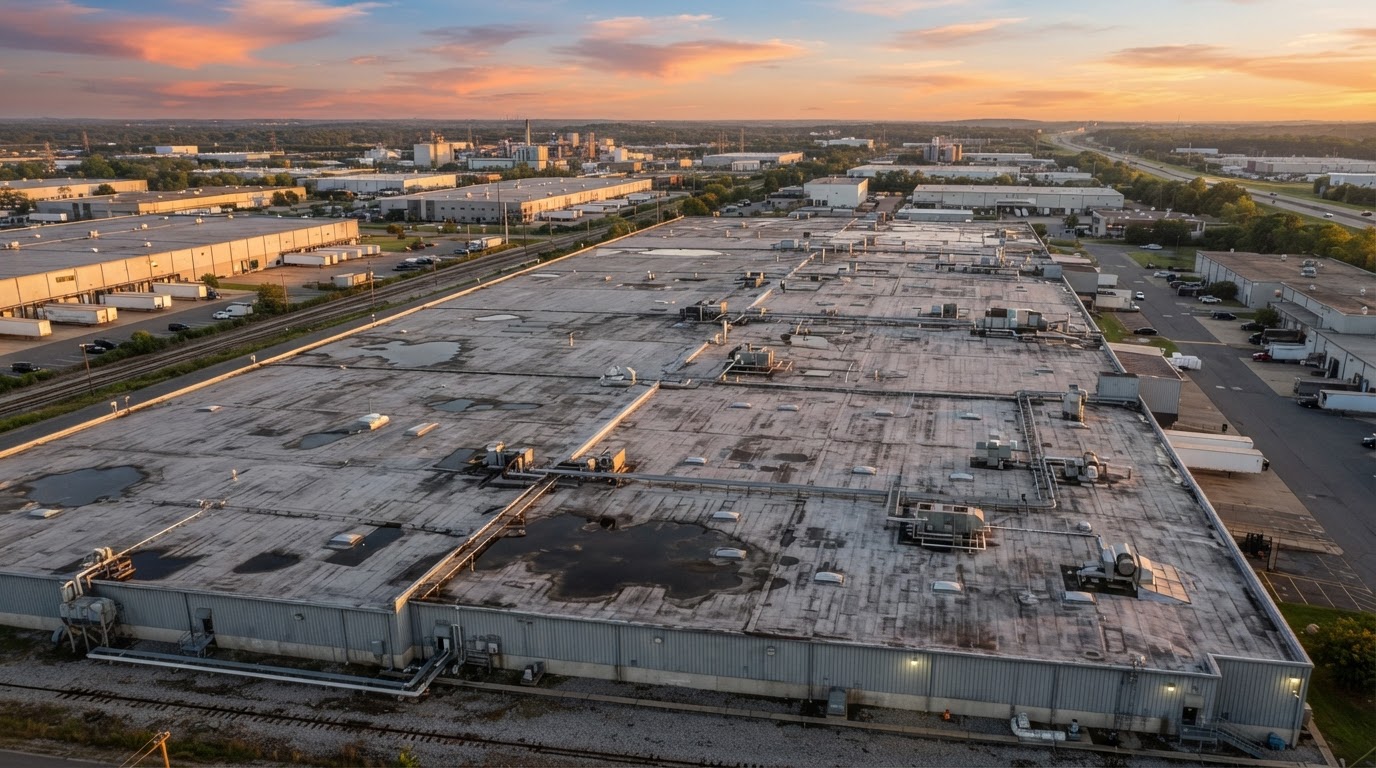
On a sloped residential roof, water runs off quickly. On a flat or low-slope commercial roof, the drainage path is much shallower, and water can collect in low spots. This is known as ponding water, and it's one of the most common issues we see on commercial roofs.
Why ponding water matters
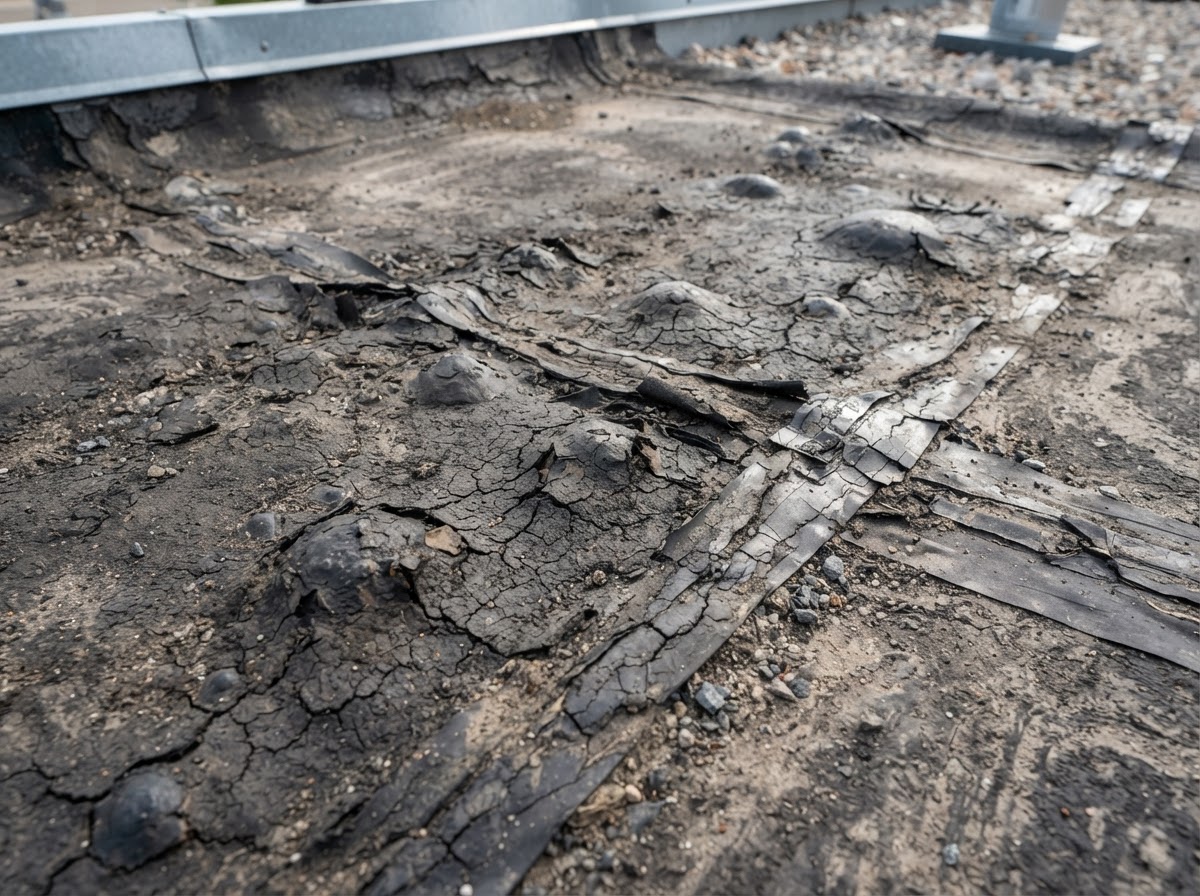
Standing water adds weight to the roof, accelerates membrane aging, and increases the likelihood of leaks. Over time, it can saturate insulation, compromise the deck, and shorten the serviceable life of the entire system. Most industry guidance considers water that remains 24–48 hours after rain to be a concern.
Common causes
- Degraded or blocked drains, scuppers, and gutters
- Settling or deflection in the roof deck creating low spots
- Improper slope or original drainage design
- Membrane shrinkage or movement over time
What to do about it
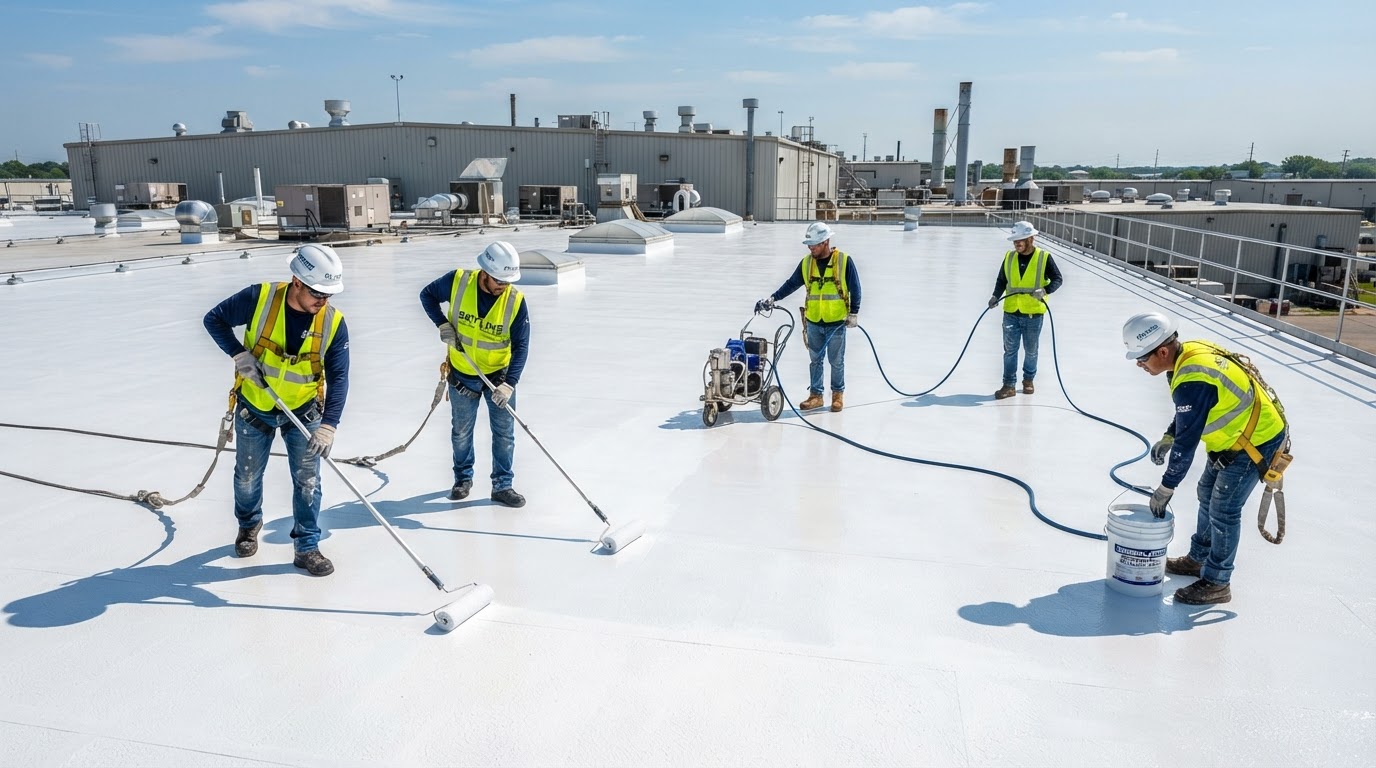
Start by clearing any debris from drains and confirming water has a clear path off the roof. If ponding persists after drainage is clear, the low spots or slope may need to be addressed. Depending on the roof's overall condition, options can include targeted repairs, adding slope, or — if the system is otherwise sound — a restoration or coating approach.
Don't ignore it
Ponding water tends to get worse, not better, over time. Addressing it early — before insulation is saturated and the deck is affected — gives property owners the widest range of options.